
Christ Church Cathedral
A church in the heart of the city, with a heart for the city
What’s new
Cathedral Matters
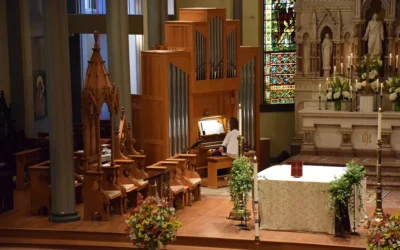
The First Sunday in Lent
Almighty God, whose blessed Son was led by the Spirit to be tempted by Satan: Come quickly to help us who are assaulted by many temptations; and, as you know the weaknesses of each of us, let each one find you mighty to save; through Jesus Christ your Son our Lord,...
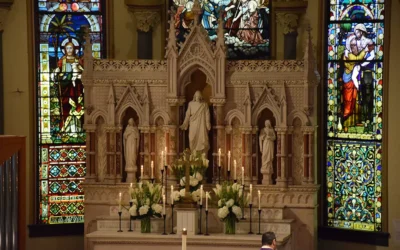
Ash Wednesday
Almighty and everlasting God, you hate nothing you have made and forgive the sins of all who are penitent: Create and make in us new and contrite hearts, that we, worthily lamenting our sins and acknowledging our wretchedness, may obtain of you, the God of all mercy,...
The Last Sunday after Epiphany
O God, who before the passion of your only begotten Son revealed his glory upon the holy mountain: Grant to us that we, beholding by faith the light of his countenance, may be strengthened to bear our cross, and be changed into his likeness from glory to glory;...
Visit Us
Discover the Cathedral
From Episcopal News Service
Archbishop of Canterbury preaches at ACC’s closing service
July 06, 2026
[Episcopal News Service] Archbishop of Canterbury Sarah Mullally preached July 4 during the closing Holy Eucharist of the weeklong 19th meeting of the Anglican Consultative Council in Belfast, Northern Ireland. The service was held at Belfast Cathedral, also known as the Cathedral Church of St. Anne. It concluded the June 28-July 4 meeting, which was attended by ACC members from 37 Anglican provinces from around the world, including The Episcopal Church. The following is the text of Mullally’s sermon, as released by her office. The theme that has gathered us – “Called to One Hope” – has been a challenging one. It was an invitation – despite our differences and disagreements – to trust the God who has called us together, and therefore hope in the future he is preparing for us. We have prayed together, studied the scriptures and walked together despite the deep pain of our differences. Together we have tended the soil of trust from which hope can grow. But this work is not finished yet. Walking together in Derry-Londonderry, we witnessed how Christian hope had been a daily resistance against conflict, as the hard work of peace and reconciliation was built. It reminded me of my recent pilgrimage in the Holy Land with my brother, Archbishop Hosam [Naoum], where we witnessed Christian hope – a faithful daily resistance against injustice and despair, lived out by those who carry the light of Christ in their hearts, even in the darkest times. We have heard stories from each other about how member churches across the Communion are proclaiming the message of hope that we have in Jesus Christ. We have heard stories of care for Creation; standing up against violence against women and girls; welcoming the stranger and the refugee; building a safer church; peacebuilding; and revitalizing and planting new churches. Stories that tell us of our shared purpose in Jesus Christ. Our reading from Amos speaks of hope in a broken world and God’s promises of restoration. “The days are coming, declares the Lord, New wine will drip from the mountains and flow from all the hills, and I will bring my people back from exile. They will rebuild the ruined cities and live in them. They will plant vineyards and drink their wine; they will make gardens and eat their fruit.” The prophet Amos tells us that God wants to rebuild lives and promises new hope. We have gathered here from our various ministries and member churches seeking to follow Christ. Just as those in exile heard the words of Amos, so it is for us – we hear this promise in a fractured world. And we hear those words within a fractured church, which may make them more difficult to trust, but God has promised to do a new thing. We have thousands of years of evidence that God will raise up, he will repair. He will rebuild. We will plant vineyards—and even though we will not always tend them well, by God’s grace we will drink their wine. God doesn’t wait for us to have it all together. God calls us by name and invites us to be with him in the light of the resurrection, to trust that we are known and loved. He invites us to join him in building his church: the bride of Christ. In the Old Testament, the relationship between God and the people is likened to a vineyard owner and the vines. God has brought a vine out of Egypt, declared the Psalmist, and planted it in good land. The prophet Isaiah sings a song about God’s vineyard. Hosea spoke of God finding Israel like grapes in the wilderness. The image of the vine and the grapes is a thread through the Scriptures which continues to remind us of God’s promises. And Amos records that despite Israel’s disobedience, which led to their exile from the original “vineyard,” God allows them to return. God taught them to rebuild their cities. To replant their vineyards. God was gracious and faithful to his people just as he is to us now. Not because we are already perfect and fully formed, but precisely so that he can transform us into the people and the church he intends us to be. The scripture also uses the image of the vine to speak about the care God expects of us to show to others because we are equally known and loved by God. Jesus says that wine, the fruit of the vine, cannot be put in either old or new wine skins without care. If carelessly put into old wine skins, the wine causes the skin to crack. If unwisely put into unprepared new wine skins, the skin will burst as the wine ferments. Jesus calls us to take care of the church he loves in the same way, knowing that people are far more important and precious than wine, and knowing that the church is sometimes more fragile than wineskins. He calls us to care for one another with tenderness and to repent where we have caused harm. We are called to treat the church with patience, with commitment to our relationships, which are sometimes strained. Care of the church needs to be one of deep listening, with the study of Scripture, with attention to theological reflection and with prayer. None of this can be rushed. The Spirit is not asking us to choose between the old and the new, but to care for both, so that the wine of God’s mission is not wasted. I must admit that I don’t know very much about fermenting wine. I do, however, as a potter, know much about clay. In the ancient world, there were two types of clay jars: One kind was heavy, dark, designed for domestic use; the other was very thin and fragile. These fragile jars would crack when put in the kiln. This was intentional. When a light was placed inside […]